
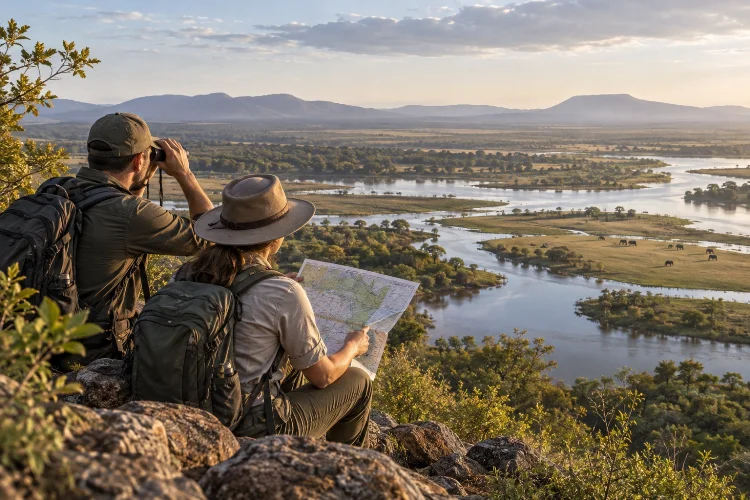
Wildlife observation trips often look simple on paper. Find a national park or reserve, choose a few trails, bring binoculars, and start searching for animals.
In reality, a productive wildlife expedition depends heavily on where you travel, when you reach each habitat, and how your route interacts with natural animal movement.
That is why advanced route planning for wildlife observation expeditions goes far beyond calculating distance.
A thoughtful itinerary considers seasonal ranges, migration corridors, feeding areas, water sources, terrain, daily activity cycles, observation distance, and safe exit options.
The U.S. Fish & Wildlife Service notes that wildlife behavior changes significantly with both season and time of day. Migration periods can create major viewing opportunities, while many animals are more active during the quieter hours around dawn and dusk.
Good route planning uses those patterns to improve observation opportunities without turning wildlife watching into pursuit.
1. Map Habitats Before Mapping Trails
The best trail is not always the trail with the most wildlife.
Start by identifying the habitats your target species actually use. Wetlands, grasslands, forest edges, river corridors, alpine meadows, coastal flats, and woodland can support very different animal communities.
Once the major habitats are clear, overlay official trails, viewpoints, roads, blinds, and observation areas.
This reverses the typical planning process. Instead of choosing an attractive trail and hoping wildlife appears, you select routes because they pass near productive habitat while keeping you on approved access corridors.
USGS research shows that animals often move between seasonal ranges through identifiable migration corridors rather than occupying the landscape evenly.
Understanding that larger ecological picture can make a short, strategically located route far more productive than an all-day hike through less suitable habitat.
2. Design the Itinerary Around Seasonal Movement
Wildlife location changes throughout the year.
Migratory birds may appear in enormous numbers for a few weeks before continuing hundreds or thousands of kilometers. Large mammals can shift between winter and summer ranges, while breeding seasons may temporarily concentrate wildlife in specific areas.
The U.S. Fish & Wildlife Service emphasizes that time of year is critical when planning refuge visits because some locations primarily provide nesting habitat while others function as wintering or migration areas.
Research these seasonal patterns before booking the trip.
If your main goal is observing migrating waterfowl, arriving outside the migration window may dramatically reduce your chances regardless of how good the route is.
Seasonal planning also helps avoid sensitive areas. Breeding, nesting, and raising young can make animals particularly vulnerable to disturbance, so some routes may be restricted or inappropriate at certain times.
3. Build Observation Loops Instead of Straight-Line Routes
Point-to-point hiking works well when the destination itself is the goal. Wildlife observation often benefits from a different structure.
Consider building loops that connect several habitat types.
A morning route might begin beside wetlands, pass through woodland edges, overlook an open meadow, and return along a river corridor. This exposes you to several ecological zones without requiring constant backtracking.
Observation loops also allow you to revisit promising areas later in the day.
A meadow that appears empty at 10 a.m. may become active before sunset. By designing a circular route with optional branches, you can return without completely repeating the journey.
Keep these loops flexible. Mark shorter versions and bailout points so you can modify the route if wildlife activity, weather, or group fatigue changes.
The objective is not maximum mileage. It is maximum useful observation time.
4. Use Dawn and Dusk Without Creating Unsafe Schedules
Early morning and evening are often excellent wildlife-viewing periods.
The U.S. Fish & Wildlife Service notes that many animals become more active around dawn and dusk, partly because these periods are cooler and quieter.
However, designing every route around low light can create navigation problems.
If you plan to reach a wetland before sunrise, choose a simple approach on an established trail rather than navigating difficult terrain in darkness. Likewise, evening routes should allow enough time to return safely after the strongest observation period.
Carry offline maps and a headlamp even if you expect to finish before dark.
A useful strategy is placing demanding terrain in full daylight while reserving easy observation walks for the first and final hours of the day.
Wildlife timing should improve the itinerary, not make the route unnecessarily risky.
5. Plan Viewing Distance Into the Route
Wildlife route planning should include distance from animals as a design requirement.
The National Park Service advises visitors to give wildlife room and notes that many parks require minimum distances, often around 25 yards from most wildlife and 100 yards from predators such as bears and wolves. Exact rules vary by park.
That means a route should lead to suitable observation positions rather than directly toward the animals.
Look for elevated viewpoints, roadside pullouts, viewing platforms, hides, or trail sections that offer broad visibility across habitat.
Binoculars and spotting scopes can turn a distant viewpoint into a much better wildlife experience than physically moving closer.
If an animal changes its behavior because of your presence, the NPS advises that you are already too close.
A well-designed route helps prevent that problem before it occurs.
6. Keep Movement Corridors Open
One of the easiest mistakes in wildlife observation is accidentally blocking the place animals want to travel.
Narrow valleys, river crossings, gaps between vegetation, shorelines, and well-used game trails can function as natural movement corridors.
If several photographers stand directly across such a route, wildlife may stop, turn around, or move into less suitable terrain.
San Juan Island National Historical Park specifically instructs visitors not to create barriers that constrain animal movement. It also advises staying on designated routes and using binoculars or telephoto lenses instead of approaching wildlife.
Plan viewing positions beside likely movement corridors rather than directly inside them.
This can actually improve observation quality. Wildlife moving naturally through the landscape usually produces more interesting behavior than animals reacting to a group of people.
The route should help you observe movement, not interrupt it.
7. Consider Wind, Noise, and Approach Direction
Visual distance is only one part of wildlife disturbance.
Sound, sudden movement, and approach direction can also affect animals. Hiking noisily toward an observation site may cause wildlife to disappear before you even arrive.
Move quietly in established viewing areas and avoid unnecessary shouting or repeated repositioning.
At the same time, do not treat silent stalking as permission to sneak dangerously close to large wildlife. In some bear environments, making your human presence known can help reduce surprise encounters, so local safety guidance always takes priority.
Wind direction can also influence your experience, especially with mammals that rely heavily on scent.
Instead of obsessively trying to remain undetected, use wind awareness to understand why animals may react earlier in one location than another.
Your aim is respectful observation, not becoming invisible.
8. Use Established Trails to Reduce Disturbance
Wildlife expeditions can tempt travelers to leave the trail whenever interesting activity appears nearby.
That often creates more problems than benefits.
The National Park Service advises staying on trails because predictable human movement reduces disturbance and helps protect surrounding habitat. Off-trail shortcuts can also damage vegetation and eventually create unofficial social trails.
Route planning should therefore prioritize official trails that already provide access to productive habitats.
If observation requires leaving a formal trail in an area where off-trail travel is permitted, select durable surfaces and follow local land-management guidance.
Leave No Trace recommends researching local regulations, preparing for hazards, and using maps to plan travel before entering natural areas.
The most productive wildlife route is not necessarily the closest possible line to the animals. It is the route that balances visibility, legal access, habitat protection, and safety.
9. Add Quiet Observation Stops
Constant walking is surprisingly ineffective for wildlife viewing.
Animals may remain hidden while people pass and resume normal activity once movement stops.
Build deliberate observation stops into your route. A productive itinerary might include 20–30 minutes beside a wetland, meadow edge, or forest opening rather than immediately continuing onward.
Sequoia and Kings Canyon National Parks recommend sitting quietly, watching from cover while remaining on the trail, and using binoculars to observe animals at a distance.
This changes route planning from a mileage exercise into a time-budget exercise.
A six-kilometer route with four good observation stops may take longer than a ten-kilometer normal hike – and that is completely fine.
Wildlife expeditions reward patience more than speed.
10. Create Alternative Routes for Changing Wildlife Activity
Animals do not follow your itinerary.
A meadow that was productive yesterday may be empty today. Water levels change, weather shifts, food availability moves, and migration timing varies from year to year.
Prepare alternatives before the trip.
Choose a primary route plus several shorter options covering different habitats. If strong wind makes a coastal observation site unproductive, you might move to a sheltered wetland. If heat reduces activity in open terrain, a forest-edge route may become more useful.
This also prevents the temptation to chase individual animals when the main route is quiet.
Flexible route planning accepts that wildlife observation involves uncertainty.
The goal is to improve probabilities rather than guarantee sightings.
11. Plan for Human Safety Around Wildlife
Routes that maximize sightings can also increase encounters.
If the region contains bears, moose, bison, elk, or other large animals, research species-specific safety rules before departure.
Denali National Park, for example, requires visitors there to stay at least 300 yards from bears and at least 25 yards from other animals, dens, and nests. These distances illustrate why travelers must check the rules for the specific destination rather than assuming one universal standard.
Never route yourself between an animal and its young, feeding area, or escape path.
If wildlife occupies the trail, give it space and be prepared to wait or retreat.
Your map should include alternate paths and turnaround points wherever possible so an unexpected encounter does not force you to pass too closely.
A wildlife sighting should change your schedule before it changes the animal’s behavior.
12. Leave Enough Time for the Unexpected
Wildlife observation almost never follows a perfect timetable.
You may spend an hour watching nothing and then suddenly encounter a remarkable scene just as you planned to leave.
Build extra time into the schedule.
Avoid placing rigid transport connections immediately after remote wildlife routes, and do not make every observation stop dependent on arriving at an exact minute.
Flexible timing also helps with ethical decision-making.
When people feel rushed, they are more likely to cut trails, move too quickly, or approach animals to get a photograph before leaving.
A good expedition plan should accomodate patience.
That may mean covering less ground than a conventional hike, but wildlife travel is not about collecting kilometers. It is about creating enough space and time to watch natural behavior develop.
Successful wildlife expeditions depend on far more than knowing where animals have been seen before. Seasonal ranges, migration corridors, habitat quality, daily activity, observation distance, trail design, and human behavior all influence what you experience.
Effective advanced route planning for wildlife observation expeditions uses those factors to create flexible routes that improve viewing opportunities without putting pressure on wildlife.
Before your next trip, map habitats first, research seasonal movement, identify several observation areas, and build plenty of quiet time into the itinerary.
Use binoculars rather than approaching, remain on authorized routes, and change direction when wildlife needs space. The best wildlife route is not the one that gets you closest – it is the one that lets animals continue behaving as though you were barely there.