
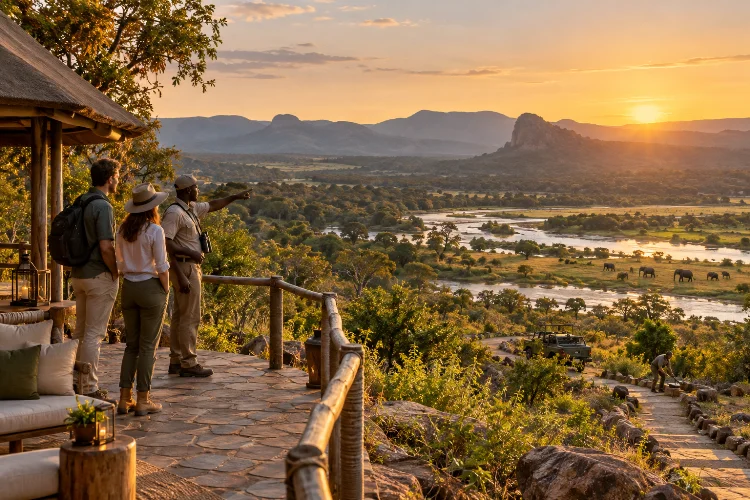
Tourism and conservation sometimes look like opposing forces. More visitors can mean crowded trails, wildlife disturbance, waste, and additional pressure on fragile habitats. Yet tourism can also provide something conservation projects constantly need: reliable funding.
Understanding how tourism revenue can support long-term nature conservation requires looking beyond entrance tickets.
Money generated through accommodation, guiding, park concessions, permits, transportation, wildlife experiences, and local businesses can help finance protected areas while creating economic reasons for communities to keep natural landscapes intact.
The World Bank notes that well-managed nature-based tourism can generate income for protected areas while supporting jobs, local businesses, biodiversity conservation, and rural economies.
The important phrase is well-managed. Tourism revenue does not automatically protect nature. The strongest systems deliberately connect visitor spending with habitat management, local livelihoods, environmental monitoring, and limits on tourism pressure.
When that connection works, conservation becomes economically valuable not only to park authorities but also to people living around protected landscapes.
1. Entrance Fees Can Directly Finance Protected Areas
Entrance fees are one of the clearest ways tourism generates conservation funding.
Visitors pay for access, and some or all of that money can be retained for management activities such as habitat restoration, trail maintenance, visitor education, monitoring, sanitation, and conservation infrastructure.
The World Bank describes entrance fees as one of the most common revenue sources for protected and conserved areas. They can supplement government budgets while helping managers cover conservation and visitor-management costs.
The U.S. National Park Service provides a practical example. At least 80% of recreation fee revenue generally remains in the park where it was collected, while the remaining portion can support parks that collect little or no fee revenue. Fee-funded projects have included trail work and habitat restoration.
The conservation benefit becomes stronger when visitors understand where their money goes.
2. Tourism Can Make Healthy Ecosystems Economically Valuable
Protected landscapes often compete with other potential land uses.
Forest may have commercial value as timber. Wetlands can be drained for development. Wildlife habitat may be converted to agriculture or infrastructure.
Nature tourism can change that calculation by giving intact ecosystems measurable economic value.
The World Bank found that investments in protected areas and nature-based tourism can produce substantial economic returns. In assessments covering protected areas in Brazil, Fiji, Nepal, and Zambia, estimated returns were at least several times higher than the public investment made in those areas.
That does not mean every forest should become a tourist attraction.
It means tourism can become one part of a broader conservation-finance system in which keeping ecosystems healthy produces continuing economic benefits instead of a one-time return from resource extraction.
3. Local Employment Creates Stronger Conservation Incentives
Conservation becomes much harder when nearby communities carry the costs of protected areas but receive few benefits.
Tourism can improve that relationship through employment.
Guides, drivers, lodge employees, cooks, conservation staff, boat operators, craftspeople, food suppliers, and many other businesses can earn income from visitors travelling to protected landscapes.
World Bank research in Nepal found that protected-area tourism generated thousands of jobs and increased household income around major nature destinations. Tourist spending also reached sectors outside conventional tourism, including retail, transportation, and other services.
This creates an important conservation incentive.
When wildlife and healthy landscapes generate dependable livelihoods, local people have a stronger economic reason to protect those resources.
However, benefits need to be distributed reasonably. If almost all tourism revenue leaves the destination through external companies, the conservation incentive for nearby communities becomes much weaker.
4. Revenue Sharing Can Connect Communities With Conservation
Direct local employment is useful, but some tourism models go further by sharing conservation revenue with communities.
Park fees, tourism concessions, lease payments, or community conservancy arrangements can return part of the visitor economy to people living near protected areas.
The World Bank has highlighted community conservancies in Kenya where tourism lease payments historically provided income to thousands of local landowners and wider community members. Such income can strengthen incentives to maintain wildlife habitat rather than converting land to other uses.
This is particularly important where wildlife moves beyond formal park boundaries.
Animals do not understand administrative lines. If surrounding communities benefit economically from wildlife remaining alive and habitat remaining functional, conservation can extend beyond the official protected area.
Good revenue-sharing systems therefore turn nearby communities into stakeholders rather than spectators.
5. Visitor Fees Can Help Manage Overtourism
Tourism revenue is not only about raising as much money as possible.
Pricing can also be used as a visitor-management tool.
The World Bank notes that protected-area entrance fee systems can help regulate visitor numbers, reduce congestion, manage ecological impacts, and generate conservation funding simultaneously.
For extremely sensitive destinations, higher fees combined with visitor limits may sometimes generate enough revenue without requiring continuously increasing tourist numbers.
That idea matters because conservation tourism can become self-defeating if success leads to overcrowding.
A fragile island does not necessarily need one million visitors paying very little. It may achieve stronger conservation outcomes with fewer visitors paying fees that realistically reflect management costs.
Pricing should still consider accessibility and local residents so conservation does not become something only wealthy travelers can experience.
6. Tourism Concessions Can Generate More Than Entrance Fees
Visitors spend money on far more than admission.
Accommodation, restaurants, transport, camping, guiding, boat trips, parking, shops, and recreational services all generate economic activity.
IUCN guidance identifies multiple potential tourism revenue streams for protected areas, including entrance fees, recreation charges, accommodation, merchandise, user fees, and concession payments from private businesses operating within protected destinations.
A well-designed concession agreement can require tourism operators to contribute financially to conservation while following environmental standards.
For example, a lodge might pay a concession fee for operating near a protected landscape. Part of that revenue can support ecosystem management, while the business creates jobs and purchases local goods.
The key is designing contracts transparently so conservation receives a meaningful share rather than simply carrying the environmental costs of private tourism.
7. Conservation Revenue Should Fund Monitoring, Not Just Facilities
Visitors often notice new boardwalks, toilets, parking areas, or visitor centers because those projects are highly visible.
Long-term conservation also requires less visible spending.
Protected areas need wildlife surveys, habitat monitoring, invasive-species control, ecological research, restoration, ranger operations, and long-term data collection.
IUCN’s conservation-finance guidance emphasizes that protected areas require strategic financial planning if funding mechanisms are going to produce lasting ecological outcomes.
Tourism money should therefore not be treated simply as a construction budget.
Some revenue needs to support the scientific work that tells managers whether ecosystems are actually improving or declining.
Without monitoring, a destination could continue receiving tourists and generating money while the natural asset behind the entire tourism economy quietly deteriorates.
8. Tourism Income Can Support Rangers and Protection
Protected landscapes require active management.
Rangers may monitor wildlife, enforce regulations, manage visitor behavior, respond to fires, protect habitats, maintain trails, or help prevent illegal activities.
Tourism revenue can contribute to these operations, particularly in countries where protected-area budgets are limited.
The dependence can sometimes be substantial. World Bank analysis has documented protected-area systems where tourism historically accounted for a large share of operating revenue.
That creates both an opportunity and a vulnerability.
Tourism can finance conservation, but protected areas that depend almost entirely on visitors may face severe funding shortages when travel collapses because of economic shocks, natural disasters, pandemics, or political instability.
Long-term conservation finance should therefore combine tourism income with government funding, grants, philanthropy, endowments, or other sources rather than relying on a single revenue stream.
9. Transparent Spending Builds Visitor Support
People are generally more comfortable paying conservation fees when they can see how the money is used.
A fee that disappears into an unexplained administrative system may feel like another tax. A fee clearly connected to trail restoration, wildlife monitoring, habitat protection, or community projects feels more meaningful.
The National Park Service openly provides examples of projects financed through recreation fees, including visitor facilities and habitat-related work.
Protected destinations can use similar transparancy.
Annual reports, signs, websites, and visitor-center displays can explain where tourism income goes and what conservation outcomes it helped achieve.
This also creates accountability.
If travelers are told that part of their payment supports ecosystem restoration, managers and tourism businesses should be able to demonstrate that those funds actually reached conservation activities.
10. Local Spending Matters as Much as Park Fees
A traveler can support conservation even after leaving the park gate.
Choosing locally owned accommodation, guides, restaurants, transport providers, and other businesses helps keep more tourism value within nearby communities.
The World Bank explains that tourist spending on accommodation, food, transport, and activities can ripple through local economies, strengthening businesses and diversifying incomes around nature destinations.
This economic multiplier is important because conservation benefits should not depend only on people employed directly by a national park.
A farmer selling food to lodges, a mechanic maintaining safari vehicles, or a local craft producer can also benefit from a healthy visitor economy.
When more households see an economic connection between protected nature and their livelihoods, public support for conservation can become stronger.
11. More Tourism Is Not Always Better Conservation
A destination can earn significant tourism revenue and still suffer environmental decline.
Too many visitors may increase habitat disturbance, erosion, waste, freshwater demand, wildlife stress, traffic, and infrastructure development.
IUCN’s protected-area tourism guidance emphasizes balancing visitor use with ecological limits rather than treating tourism growth as an unlimited goal.
This means some tourism revenue should be reinvested in managing the impact that generated it.
Reservation systems, seasonal closures, shuttle services, ranger staffing, boardwalks, habitat restoration, and visitor education can all help.
The most sustainable model is not necessarily one that maximizes visitor numbers. It is one that generates enough value to fund conservation while keeping ecological pressure within acceptable limits.
12. Travelers Can Choose Where Their Money Goes
Tourists themselves influence whether nature travel supports conservation.
Before booking, look at how an operator works with protected areas and communities. Does it employ local guides? Follow wildlife-viewing rules? Contribute to conservation programs? Operate with sensible group sizes?
Pay legitimate entrance and permit fees rather than seeking unofficial access.
Use locally based services when they meet appropriate ethical and safety standards, and avoid businesses that advertise illegal wildlife interactions or access to restricted habitat.
Travelers cannot audit every dollar, but purchasing choices send signals.
Tourism companies respond to demand. When visitors deliberately choose businesses that protect habitat and share economic benefits locally, responsible tourism becomes more competitive.
That is how individual spending can contribute to a wider conservation model.
Tourism can provide much more than an economic boost to beautiful destinations. When revenue is intentionally connected to conservation, visitor spending can finance protected areas, restore habitat, support rangers, create local jobs, and give communities stronger incentives to keep ecosystems healthy.
Understanding how tourism revenue can support long-term nature conservation also highlights an important limitation: money alone is not enough. Revenue needs transparent management, fair community participation, environmental monitoring, and visitor limits that protect the natural asset generating the income.
On your next nature-focused trip, look beyond the ticket price. Support legitimate protected-area fees, responsible local businesses, ethical guides, and conservation-minded operators.
Done carefully, tourism can help transform visiting nature from simple consumption into a practical source of long-term protection.