
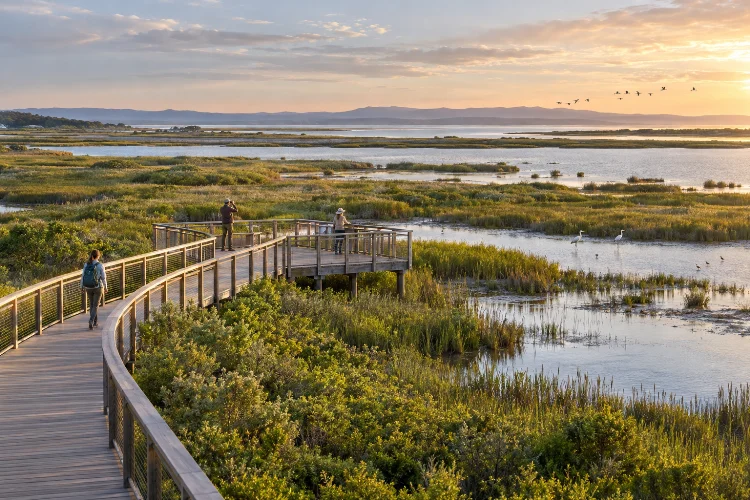
Protected areas face a difficult challenge. People need opportunities to experience forests, wetlands, mountains, coastlines, and wildlife, yet the very act of visiting these places can gradually damage the ecosystems everyone wants to enjoy.
Too much concentrated foot traffic can widen trails, disturb wildlife, compact soil, damage vegetation, and create pressure for additional roads, parking, toilets, and other infrastructure.
Closing natural areas completely would reduce many of those impacts, but it would also limit recreation, education, tourism revenue, and public support for conservation.
Understanding how protected areas balance visitor access and ecosystem health therefore means looking beyond the simple choice between “open” and “closed.”
Modern visitor-use management focuses on creating access that remains compatible with conservation goals. The Interagency Visitor Use Management Council describes this as an adaptive process that protects natural and cultural resources while still providing high-quality visitor experiences.
The result is often a mix of zoning, carefully designed infrastructure, seasonal restrictions, monitoring, education, and limits that change as conditions change.
1. Protected Areas Define What Conditions They Want to Maintain
Before deciding how many people should visit, managers first need to understand what they are trying to protect.
One wetland may prioritize undisturbed nesting habitat. Another park might need to protect fragile alpine vegetation while still providing access to famous viewpoints. A heavily visited recreation area may tolerate more infrastructure than a wilderness zone.
The Visitor Use Management Framework recommends defining desired conditions for natural resources, visitor experiences, facilities, and services before choosing management strategies. Managers then monitor whether those conditions are being maintained over time.
This distinction matters because there is no universal number of visitors that every ecosystem can handle.
Good managment starts with ecological objectives, then designs access around them.
2. Zoning Separates Intensive Recreation From Sensitive Habitat
One of the most practical tools is zoning.
A protected area can contain highly accessible visitor zones alongside places where human activity is intentionally limited. Popular viewpoints, visitor centers, picnic sites, and short trails may concentrate people into relatively durable locations.
More sensitive zones may permit only guided access, restrict certain activities, or remain closed altogether.
IUCN guidance emphasizes strategic tourism planning in protected areas because tourism can provide conservation benefits while also generating substantial environmental and social impacts.
Zoning allows these competing pressures to be managed within the same landscape.
Instead of spreading thousands of visitors across an entire ecosystem, managers can direct most recreation toward places better able to absorb it while preserving quieter refuges for wildlife.
3. Visitor Capacity Is About More Than Counting People
Protected-area discussions often use terms such as “carrying capacity,” but simply counting visitors can be misleading.
Ten visitors behaving irresponsibly in sensitive habitat might create more damage than hundreds using a well-designed boardwalk.
The Interagency Visitor Use Management Council defines visitor capacity as the maximum amounts and types of visitor use an area can accommodate while maintaining desired resource conditions and visitor experiences. It also emphasizes that capacity is only one part of a broader visitor-management strategy.
Managers may therefore regulate where people go, what activities they perform, when they arrive, and how they move through an area—not only the total number entering.
Reservations and permits can be useful, but they are not automatically the answer everywhere.
Sometimes better information, improved trails, or redesigned facilities can solve the problem without reducing access dramatically.
4. Trail Design Concentrates Impact in Manageable Areas
Good infrastructure can actually protect nature.
A boardwalk through a wetland concentrates footsteps onto one narrow route instead of allowing hundreds of people to create informal paths through vegetation. Proper drainage can also keep hikers from walking around mud and widening trails.
At Cape Cod National Seashore, for example, rehabilitation of the Atlantic White Cedar Swamp Trail was designed both to improve visitor safety and protect a rare, sensitive wetland from the pressure of heavy visitation.
Death Valley National Park has used a similar approach at Salt Creek, where boardwalk infrastructure provides accessible opportunities to view a unique ecosystem while helping protect the habitat of the Salt Creek pupfish.
Infrastructure is therefore not always the opposite of wilderness conservation.
When carefully placed, it can give people access while keeping their physical impact concentrated and predictable.
5. Seasonal Closures Protect Wildlife When It Is Most Vulnerable
Access does not always need to be restricted permanently.
Many ecosystems become particularly sensitive during nesting, breeding, migration, or wintering periods. Temporary closures allow managers to protect those critical windows while reopening areas later.
Cross Creeks National Wildlife Refuge, for instance, closes refuge land between November 15 and March 15 to reduce disturbance to wintering waterfowl and other migratory birds.
At Deer Flat National Wildlife Refuge, islands are seasonally closed during nesting periods to protect breeding wildlife.
This approach can preserve significant visitor access over the full year while giving wildlife periods of minimal disturbance.
For travelers, those closures may occasionally feel inconvenient. Ecologically, however, timing can be more important than total annual visitor numbers.
6. Monitoring Reveals When Visitor Pressure Is Becoming Too High
Protected areas cannot simply build a trail, establish a rule, and assume the problem is solved forever.
Visitor behavior changes. Popularity increases. Climate conditions shift, and wildlife may begin using different areas.
That is why monitoring is central to adaptive visitor management.
The Visitor Use Management Framework recommends identifying indicators and thresholds that can show whether desired ecological and recreational conditions are being maintained. If monitoring shows conditions deteriorating, managers can adjust their approach.
A park might track vegetation loss beside trails, campsite expansion, wildlife disturbance, crowding, erosion, or the number of informal paths.
Managers do not need to wait until an ecosystem is seriously damaged.
Thresholds can trigger action earlier, allowing restrictions or restoration to be introduced before impacts become much harder to reverse.
7. Adaptive Management Keeps Rules Flexible
The strongest visitor systems are rarely fixed forever.
Imagine a trail where visitor numbers increase significantly after a location becomes popular online. Managers might first improve signs encouraging people to remain on the official trail.
If that fails, fencing or a boardwalk could follow. Continued degradation might eventually justify permits, timed entry, or temporary closure.
The Interagency framework specifically emphasizes implementation, monitoring, evaluation, and adjustment rather than treating visitor decisions as permanent one-time choices.
This flexibility is important because ecosystems are dynamic.
Floods, fires, drought, wildlife movements, and erosion can change what an area can accomodate. Visitor behavior can shift just as quickly.
Adaptive management allows access rules to respond to what is actually happening on the ground.
8. Education Can Reduce the Need for Restrictions
Not every conservation problem requires a barrier or permit.
Sometimes visitors create damage simply because they do not understand why an action matters.
Someone might leave an official trail to photograph wildflowers without realizing repeated footsteps can produce a permanent social trail. Another visitor may approach wildlife because the animal appears calm.
Clear interpretation can explain these consequences before restrictions become necessary.
IUCN’s protected-area tourism guidance stresses the potential for tourism to build stronger connections between visitors and conservation values.
That educational role is significant.
Visitors who understand why a wetland is closed during nesting season are more likely to respect the closure than people who encounter only a “Do Not Enter” sign without explanation.
Well-informed travelers can become part of the conservation strategy rather than simply another impact to control.
9. Managers Must Consider Visitor Experience Too
Ecosystem protection is central, but protected areas are also created so people can experience, learn from, and develop connections with natural landscapes.
Crowding can reduce that experience even when ecological damage remains limited.
A mountain viewpoint packed with hundreds of people, a trail dominated by traffic noise, or a wildlife observation site where visitors constantly block each other’s views may technically remain environmentally functional while feeling very different from the experience the protected area was meant to provide.
The Visitor Use Management Council includes both resource conditions and quality visitor experiences in its management framework.
This is why timed entry or parking management may sometimes be introduced even before severe ecological degradation occurs.
Spreading people across different times or locations can protect both ecosystems and the sense of place visitors came to experience.
10. Restrictions Should Target the Actual Problem
One of the most important principles is proportionality.
Managers do not need to ban an activity across an entire park when the impact occurs only in one sensitive location.
If wildlife disturbance is concentrated around a nesting beach, a seasonal beach closure may be enough. If erosion occurs mainly beside one heavily visited viewpoint, a boardwalk or fencing may solve the problem.
The visitor-use framework encourages managers to understand the connection between particular visitor behaviors and resource impacts before selecting management strategies.
This leads to more targeted decisions.
It also helps preserve access. Visitors are generally more likely to accept a focused restriction when they can see that it addresses a specific ecological concern rather than simply limiting recreation without explanation.
11. Public Access Can Strengthen Conservation Support
Visitors are not automatically a threat to protected ecosystems.
Experiencing healthy natural landscapes can create stronger public appreciation for them. Tourism can also support local economies, environmental education, park fees, and conservation funding.
IUCN recognizes tourism as a potentially positive force for protected areas because it can connect visitors to conservation values and create economic arguments for protecting nature.
The challenge is keeping those benefits from overwhelming the resource that creates them.
A protected landscape that receives no public engagement may struggle to build broad political support. One overwhelmed by uncontrolled tourism may gradually lose its ecological value.
Successful visitor management sits between those extremes.
The objective is not maximum access or minimum access. It is sustainable access that can continue without undermining the ecosystem.
Protected areas do not have to choose between welcoming people and protecting nature. The real challenge is designing visitor access around ecological limits.
Understanding how protected areas balance visitor access and ecosystem health reveals a combination of zoning, carefully designed trails, visitor capacities, seasonal closures, monitoring, education, and adaptive decision-making.
For visitors, respecting these systems is part of responsible nature travel. Follow designated routes, observe seasonal closures, respect wildlife buffers, and understand that restrictions usually exist because specific habitats or species need additional protection.
The next time a park introduces a permit, reroutes a trail, or temporarily closes an area, look beyond the inconvenience. Smart visitor management is often what allows spectacular natural places to remain both accessible and healthy for decades to come.