
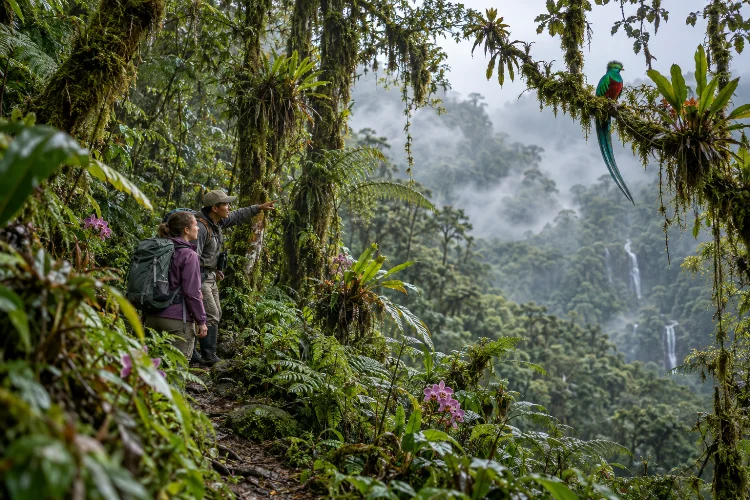
Some of the world’s most exciting nature destinations are also among its most vulnerable.
Tropical forests filled with endemic birds, isolated islands with unique reptiles, mountain ecosystems packed with rare plants, and coastal habitats supporting threatened species can offer unforgettable travel experiences.
They can also be remarkably easy to damage.
That is why advanced conservation travel planning for biodiversity hotspots needs a different mindset from ordinary nature tourism. The goal is not simply to reach a beautiful destination.
It is to understand what makes the ecosystem sensitive, when wildlife is most vulnerable, how tourism pressure is managed, and whether your spending actually supports conservation.
There are currently 36 recognized biodiversity hotspots. To qualify, a region must contain at least 1,500 endemic vascular plant species and must have lost at least 70% of its original native vegetation.
These are places where biodiversity is both exceptionally rich and already under serious pressure. Planning carefully therefore matters.
1. Understand Why a Biodiversity Hotspot Is Different
A biodiversity hotspot is not simply a place with lots of animals.
The concept focuses on regions containing exceptional concentrations of species found nowhere else while also experiencing major habitat loss. Conservation International notes that the world’s 36 hotspots cover only about 2.5% of Earth’s land surface.
This creates an unusual travel situation.
An endemic orchid, frog, bird, or small mammal might exist within a relatively limited geographic area. Damage to that habitat cannot always be offset somewhere else because the species may literally occur nowhere else.
Before travelling, research the destination beyond its famous wildlife. Learn which habitats are particularly fragile, which species are endemic, and what threats the region currently faces.
This changes the trip from simple sightseeing into informed nature travel.
2. Choose the Season Based on Ecology, Not Just Weather
The most comfortable travel season is not always the best conservation season.
Wildlife may be breeding, nesting, spawning, migrating, or raising young during periods when tourists also want to visit. Plants may be especially vulnerable during wet seasons, while dry conditions can increase fire risk or concentrate animals around limited water sources.
Check official protected-area information before booking.
A trail, island, beach, or nesting site may be seasonally closed even when the wider destination remains open. Those restrictions usually exist because disturbance becomes more damaging during particular biological periods.
The Convention on Biological Diversity recommends incorporating biodiversity information, impact assessment, monitoring, and adaptive management into tourism planning in vulnerable ecosystems.
If your preferred location is temporarily restricted, choose another authorized experience rather than searching for an unofficial route around the closure.
3. Plan Routes That Concentrate Impact
In fragile ecosystems, where you walk can matter as much as how many kilometers you cover.
Use established trails, boardwalks, designated viewpoints, and official campsites whenever they are provided. These features concentrate visitor pressure onto locations designed to absorb it.
The alternative may look more adventurous but can create lasting damage.
Repeated shortcuts through vegetation can form new social trails. Walking through wet soil can damage roots, while stepping across fragile mountain or island vegetation may leave impacts that take years to recover.
This is especially important in destinations where the ecosystem already survives in fragmented patches.
A good conservation itinerary does not try to reach every interesting-looking place. It prioritizes routes where access has already been assessed and managed.
Sometimes the slightly less dramatic viewpoint is the more responsible choice.
4. Treat Biosecurity as Part of Travel Planning
One of the easiest conservation impacts to overlook is the movement of organisms between locations.
Seeds, fungal spores, insects, mud, and aquatic organisms can travel on boots, bags, camping equipment, vehicle tires, boats, and other gear.
This matters enormously on islands and in ecosystems containing species that evolved with limited exposure to outside competitors or diseases.
Clean footwear before moving between reserves or islands. Remove soil and plant material from tread, gaiters, tripods, tent pegs, and backpacks.
Aquatic equipment requires even more attention. Boats, waders, diving gear, and other equipment can move organisms between lakes, rivers, wetlands, and marine sites.
Do this before the trip rather than trying to clean everything hurriedly at the next trailhead.
Good conservation travel means preventing yourself from becoming an accidental transport system for invasive species.
5. Reduce Wildlife Pressure Instead of Chasing Sightings
Biodiversity hotspots often attract travelers because they offer opportunities to see rare species.
That creates an obvious risk: rarity encourages people to get closer.
Avoid itineraries built around pursuing individual animals. Instead, choose established observation areas, hides, guided routes, and viewpoints where wildlife can be watched without blocking movement or interrupting feeding.
IUCN guidance recognizes tourism as a potentially positive force for protected areas, but it also stresses that visitor infrastructure and high tourism volumes create ecological and social impacts that require active management.
If an animal moves away, stops feeding, becomes alert, or changes direction because of your presence, increase the distance.
Do not use food, recorded calls, or repeated close approaches just to improve a photograph.
The best wildlife encounter is usually one where natural behavior continues normally.
6. Choose Operators That Can Explain Their Conservation Impact
The words “eco-tour,” “sustainable,” and “conservation experience” are easy to add to marketing.
Evidence is harder.
Ask operators how conservation is funded. Do permit fees support the protected area? Does part of the booking price fund habitat restoration, research, or community conservation? Are local guides employed in meaningful roles?
Also look at group size.
A company bringing small groups along established routes may place much less pressure on a sensitive ecosystem than an operator maximizing daily visitor volume.
IUCN guidance on sustainable tourism argues that tourism should contribute to the purpose of protected areas rather than undermine it.
Good operators can usually explain their environmental rules clearly. They should be comfortable saying that certain places are off-limits, certain wildlife cannot be approached, and some activities are unavailable during sensitive seasons.
Those limitations are often a positive sign.
7. Keep Tourism Revenue Close to the Destination
Biodiversity hotspots are not empty wildernesses.
CEPF estimates that around 2 billion people live within the world’s recognized biodiversity hotspots, with many communities relying directly on healthy ecosystems for livelihoods and well-being.
That makes local economic benefit an important part of conservation travel.
Where appropriate, use locally based guides, accommodations, transportation, restaurants, and legitimate community enterprises. This helps more visitor spending remain within the destination.
It also creates an economic relationship between healthy ecosystems and local livelihoods.
However, avoid treating “local” as automatically sustainable. A locally owned activity can still disturb wildlife or damage habitat.
Look for businesses that combine community benefit with responsible ecological practices.
Long-term conservation works better when both biodiversity and people gain something from keeping natural systems healthy.
8. Manage Visitor Pressure Through Timing and Location
Popular biodiversity destinations can become victims of their own success.
A small trail, nesting beach, coral site, or forest clearing may suddenly receive thousands of visitors because it becomes famous online.
Instead of automatically visiting at the busiest time, consider shoulder seasons, less crowded entry points, or alternative authorized sites within the same region.
The CBD tourism guidelines encourage managers to use baseline information, impact assessment, monitoring, mitigation, and adaptive management when tourism affects vulnerable ecosystems.
Travelers can support the same logic.
If one viewpoint is overwhelmed, using another official location can distribute pressure more sensibly.
Avoid geotagging exact locations of rare plants, nests, dens, or highly sensitive species when publicity could create additional disturbance.
Responsible sharing is now part of responsible travel.
9. Watch Your Resource Use Outside Protected Areas
Conservation impacts do not end at the park boundary.
Hotels use water and energy. Vehicles create emissions. Restaurants generate waste. New tourism infrastructure can fragment habitat outside formal reserves.
Choose accommodation and transport with this wider footprint in mind.
Staying longer in one destination may be more sensible than repeatedly flying or driving between several nearby hotspots. Shared transportation can reduce road traffic, while accommodation with credible water and waste management can reduce pressure on local resources.
This is particularly relevant on islands and in dry regions where freshwater and waste capacity may be limited.
The enviroment supporting tourism includes more than the trail you walked that morning.
Conservation travel should therefore consider the complete trip rather than only behavior inside a protected area.
10. Leave Natural Objects and Ecological Processes Alone
Hotspots are interesting precisely because of their biological detail.
Rare flowers, shells, insects, feathers, rocks covered with lichens, driftwood, and unusual seeds can look like perfect souvenirs.
Leave them where they are.
Removing natural material may be illegal, and even apparently insignificant objects can play ecological roles. Fallen wood provides habitat, shells can be reused by animals, and seeds contribute to future vegetation.
The same principle applies to photography.
Do not move animals, rearrange nests, cut vegetation, stack rocks, or alter a tide pool to create a cleaner composition.
Avoid touching rare plants simply because they seem sturdy.
A good rule is simple: photograph the detail without changing the scene.
11. Build Flexibility Into the Itinerary
Sensitive ecosystems rarely fit perfectly into rigid travel schedules.
Heavy rain may close trails. Wildlife activity may trigger temporary restrictions. Fire danger, flooding, disease outbreaks, or conservation work may change access with little notice.
Do not treat these changes as failures.
IUCN’s visitor-management framework emphasizes that sustainable tourism in protected areas requires active management because ecological conditions and visitor pressures change over time.
Build several alternatives into the itinerary.
If one habitat closes, visit another legal site. If a guide advises against entering an area, change the plan rather than pushing forward because you already paid for transportation.
Conservation-minded travelers need to be able to accomodate nature rather than expecting nature to accommodate the schedule.
12. Measure Trip Success Differently
A conventional itinerary may measure success by how many places were visited.
Conservation travel needs a better metric.
Did your money support local livelihoods? Did you stay within official access rules? Did wildlife behave naturally during observations? Did you avoid adding unnecessary pressure to already popular locations?
You may see fewer species than expected.
That does not automatically make the trip unsuccessful.
A rare bird remaining undisturbed inside protected habitat is a better conservation outcome than obtaining a close photograph by pushing beyond a boundary.
The deeper goal is to experience biodiversity without becoming another threat to it.
Biodiversity hotspots offer extraordinary travel experiences precisely because they contain species and ecosystems that are difficult – or impossible – to replace. That same uniqueness means visitors need to plan more carefully than they would for an ordinary sightseeing trip.
Effective advanced conservation travel planning for biodiversity hotspots combines ecological research, seasonal timing, low-impact routes, biosecurity, ethical wildlife observation, responsible operators, and meaningful local spending.
Before your next nature-focused journey, learn why the destination is considered important, check current conservation rules, clean your equipment, and build flexibility into your itinerary.
Choose experiences that protect natural behavior rather than forcing encounters. A successful conservation trip should leave you with exceptional memories while leaving the ecosystem with as little evidence of your visit as possible.