
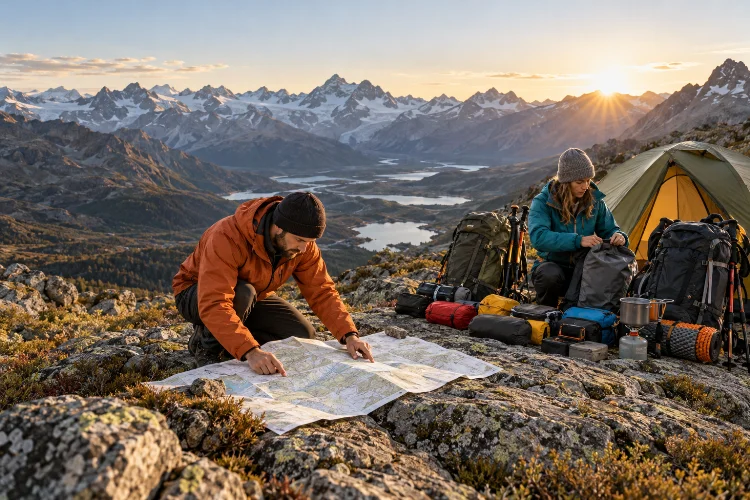
Remote wilderness travel has a very different rhythm from an ordinary weekend hike. Once you move far beyond roads, established campsites, reliable phone coverage, and quick access to rescue services, small planning mistakes can become serious problems surprisingly fast.
That is why advanced planning strategies for remote wilderness travel expeditions involve much more than choosing a scenic route and packing enough food.
You need to understand terrain, weather patterns, water availability, transportation logistics, emergency communication, group capability, and realistic travel speeds.
The goal is not to eliminate every possible risk. Wilderness environments are naturally unpredictable, and part of their appeal comes from that uncertainty. Good planning instead creates enough flexibility to deal with changing conditions without turning every surprise into an emergency.
Experienced wilderness travelers therefore build trips around margins, alternatives, decision points, and backup systems. The expedition becomes a flexible framework rather than a rigid schedule.
That approach allows you to travel farther while making smarter decisions when the enviroment does something you did not expect.
1. Build the Expedition Around Realistic Route Intelligence
A remote route should never be judged only by mileage. Ten kilometers along a maintained trail can be dramatically easier than ten kilometers through tundra, loose scree, dense vegetation, deep snow, swamp, or repeated river crossings.
Study topographic maps carefully before setting daily targets. Elevation gain, slope exposure, vegetation, water obstacles, possible campsites, escape routes, and navigation complexity can matter more than distance.
The National Park Service recommends considering the fitness and experience of every group member when selecting a route, rather than designing the itinerary around the strongest traveler.
Estimate Travel Time Conservatively
Avoid building a schedule around your best hiking pace. Remote travel usually includes navigation stops, water collection, difficult terrain, photography, equipment adjustments, changing weather, and fatigue.
A useful expedition plan includes buffer hours and, on longer journeys, at least one flexible day. That extra time can become extremely valuable when a storm, swollen river, equipment failure, or slower-than-expected terrain delays progress.
2. Create Primary, Alternate, and Exit Routes
One of the biggest differences between casual hiking and advanced expedition planning is the number of backup options.
Your primary route explains where you intend to go. Your alternate routes explain what happens when the original plan becomes impractical. Exit routes identify locations where the expedition can safely end early.
The National Park Service specifically recommends including both main and alternate itineraries in detailed backcountry trip plans, along with known risks and factors that could cause delays.
Mark these decision points before departure. A river crossing might be acceptable below a certain water level but require an alternate valley after heavy rain. A high ridge could be your preferred route in clear conditions but a poor choice during thunderstorms.
Planning those choices in advance reduces emotional decision-making when everyone is tired.
3. Treat Navigation as a Layered System
Digital navigation has made wilderness travel easier, but relying on one device is weak expedition planning.
A robust system might include offline digital maps, a dedicated GPS device, printed topographic maps, and a compass. Each tool should function seperately enough that failure of one system does not immediately leave the group without navigation.
Battery planning matters too. Cold weather can reduce battery performance, while frequent GPS use, photography, mapping, and satellite communication can drain power faster than expected.
Route knowledge should also extend beyond following a line on a screen. Understand major ridges, rivers, valleys, passes, and other terrain features so you can recognize when your actual surroundings do not match your expected position.
The U.S. Forest Service recommends studying maps before departure, understanding alternate routes, and carrying navigation tools rather than depending blindly on electronic systems.
4. Plan for Weather as a Moving Risk
Checking the forecast the morning you leave is not enough for a serious wilderness expedition.
Look at historical conditions, seasonal temperature ranges, prevailing winds, storm patterns, snowpack, river levels, and recent local reports. Mountain and remote environments can create highly localized conditions that differ significantly from forecasts for nearby towns.
Weather planning should influence your daily schedule as well. For example, exposed ridgelines or alpine passes may be safer earlier in the day if afternoon thunderstorms are common.
The National Weather Service advises backcountry travelers to plan mountain ascents and descents around storm exposure and establish turnaround times before entering dangerous terrain.
The key is establishing thresholds before the expedition. Decide what weather conditions justify waiting, rerouting, descending, or abandoning an objective instead of improvising those rules during a storm.
5. Calculate Food, Water, and Fuel as Linked Systems
Food planning is not simply a matter of counting meals. Calories, cooking fuel, water access, travel intensity, temperature, food weight, and emergency reserves all interact.
Remote expeditions often require higher energy intake than normal daily life. However, carrying excessive food adds pack weight, which can increase fatigue and reduce travel speed. The challenge is finding an efficient balance between energy density, nutrition, convenience, and weight.
Water deserves even more attention. Never assume a stream shown on a map will be flowing when you arrive. Seasonal water sources may disappear, freeze, become contaminated, or become inaccessible.
The CDC warns that even clear-looking wilderness water can contain disease-causing microorganisms. Boiling is considered the most reliable method for killing germs, while filtration followed by disinfection provides another strong option when water safety is uncertain.
Carry treatment redundancy when water availability is critical. A filter failure becomes far less serious if you also have purification tablets or another backup method.
6. Design Communication and Emergency Protocols Before Leaving
Remote expeditions should have a detailed trip plan stored with someone who is not participating.
That document should include group names, planned entry and exit points, route details, transportation information, expected return time, emergency contacts, communication devices, and clear instructions about when authorities should be contacted.
This is more useful than casually telling someone, “We should be back Sunday.”
The National Park Service notes that detailed trip plans can provide search-and-rescue teams with crucial information if travelers become overdue. The U.S. Forest Service similarly advises leaving a trip itinerary with a responsible person before departure.
Satellite messengers or personal locator beacons can provide another layer of security where cellular service is absent. However, communication equipement should support good judgment, not create a false assumption that rescue will always be immediate.
7. Build Redundancy Without Overpacking
“Bring a backup for everything” sounds sensible until your backpack weighs an unreasonable amount.
Advanced planning focuses on strategic redundancy. Duplicate systems that protect critical functions such as navigation, water treatment, fire starting, emergency communication, shelter repair, and essential medication.
Less critical items do not always need backups.
Think about equipment failure in terms of consequences. Losing a second cooking spoon is inconvenient. Losing your only navigation system during a whiteout can threaten the entire expedition.
A small repair kit can also solve multiple problems without much additional weight. Tape, cord, patches, fasteners, and simple tools can keep shelters, packs, footwear, or cooking systems functioning until the trip ends.
8. Match the Plan to the Group, Not the Goal
Ambitious wilderness objectives can encourage people to ignore early warning signs because they have invested significant effort in reaching the destination.
Good expedition leadership works differently. The route is always secondary to the condition of the group.
Before departure, discuss fitness, wilderness experience, navigation ability, medical concerns, fears, and individual responsibilities. During the expedition, evaluate fatigue, hydration, morale, injuries, weather, and pace occassionally rather than waiting until somebody clearly cannot continue.
Your slowest or least experienced member often determines the sustainable speed of the entire team.
A successful expedition is not necessarily one that reaches every planned destination. Sometimes the best decision is changing the route, spending an extra night, or turning around.
9. Integrate Leave No Trace Into Expedition Logistics
Environmental responsibility should be part of planning rather than something added after arriving in the wilderness.
Leave No Trace recommends researching regulations, preparing for hazards and extreme weather, minimizing waste, traveling in appropriately sized groups, and using established navigation methods instead of creating unnecessary markers.
Food packaging, campsite selection, waste management, fire decisions, sanitation, and wildlife protection should therefore be considered during preperation.
This is especially important in remote locations. Fragile environments may recover slowly from careless camping, vegetation damage, human waste, or abandoned equipment.
The more isolated the destination, the greater the responsibility to leave it looking as though your expedition was never there.
Successful remote wilderness travel begins long before anyone reaches the trailhead. Strong planning combines realistic route analysis, navigation redundancy, weather monitoring, food and water logistics, emergency communication, equipment preparation, and honest assessment of the group’s capabilities.
The smartest expeditions are also flexible. Instead of depending on one perfect itinerary, experienced travelers create alternatives and define clear conditions for changing course.
Use these advanced planning strategies for remote wilderness travel expeditions as a framework for your next serious backcountry journey. Study your destination carefully, create backup options, communicate your itinerary, test essential gear, and make conservative decisions when conditions change.
In truly remote terrain, preparation is not simply about comfort – it gives you more freedom to explore while keeping risk at a manageable level.